A2, B1 or B2? Which French Level You’ll Need to Live in France and How to Reach It | French Pour Moi
A2, B1 or B2? Which French Level You’ll Need to Live in France and How to Reach It
Author: Sophie
Categories: Studying in France
Hi everyone - it's Sophie here.
If you're planning a move to France, or you've already got a little place there and find yourself staying longer each year, you've probably asked yourself how much French you really need. Living there, even part-time, soon makes the answer obvious: you need enough to feel at ease with neighbours, paperwork, the doctor, the education system, and work. The more interesting question in 2026 is a bit more precise.
What level of French do you really need to do well in France, and how do you get there without spending a year practising the wrong things?
France's residence and nationality rules now require certain CEFR levels for different levels of visa or residence status. Aim too low and you can get stuck at the préfecture. Aim vaguely for "fluent" and you may spend months on grammar that never appears in the situations that actually matter.
So let's map it out clearly.
A quick note before we go further: immigration rules can change, and every case is a little different. Treat this as a practical guide for learners, then double-check your own pathway on service-public.fr or with a qualified adviser.
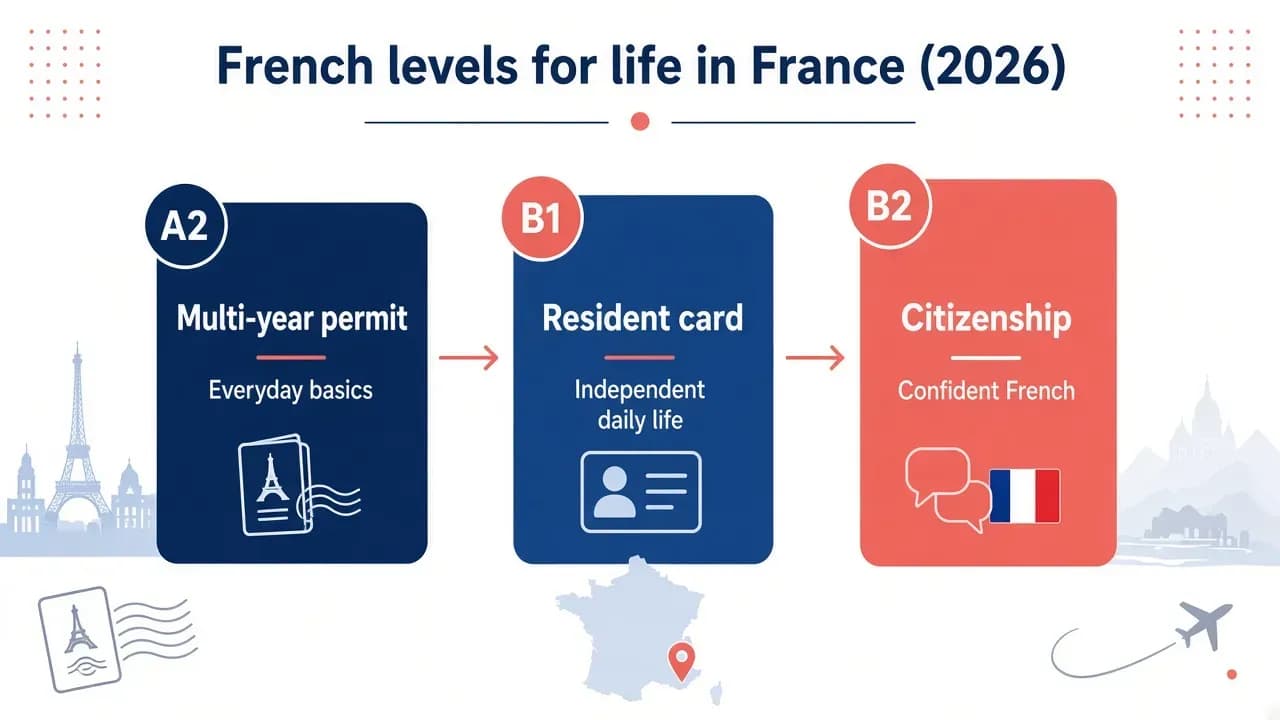
Mapping which CEFR French level to aim for depending on your goal
Here's how the levels usually line up with the milestones people ask me about:
Useful tips and insights into the French language and culture
Loading posts...
Interested in French lessons?
Send us a quick message using the form below and we'll get back to you as soon as possible!
Multi-year residence permit (carte pluriannuelle)
A2
Basic independent conversation and simple written French
10-year resident card (carte de résident)
B1
Everyday autonomy: explain yourself, give reasons, handle admin
French citizenship (naturalisation)
B2
Confident spoken and written French on a wider range of topics
One pattern I notice with people from the UK or USA relocating to France is that people study "general French" for months with no clear target, then panic six weeks before an appointment. It works much better if you pick the row that matches your next real milestone and work backwards from there.
What each level feels like when you live in France
A2 - you can manage, with a bit of effort
At A2, you can shop, book appointments, explain simple problems, and get through short conversations if the other person meets you halfway. You'll still miss fast speech, and phone calls can feel stressful.
This is a brilliant stage to focus on high-frequency phrases, a solid present tense, the basics of past and future, clear listening practice, and short spoken answers. I wouldn't throw yourself into literary reading or obscure grammar traps just yet though, that can wait.
B1 - France starts to feel manageable
B1 is where things often click for daily life. You can explain a situation at the doctor or the mairie, talk about what you've done and what you're planning, follow most everyday conversations, and write simple but connected messages. You're not elegant yet and that's fine - you're independent.
If you're settling for the longer term, this is the level I'd treat as the real life target, rather than an ambiguous promise to become fluent someday. Work on narrating in the past, giving opinions with reasons, phone calls, polite formal language, and listening at something closer to normal speed.
B2 - you can hold your own
At B2, you can follow meetings and the news, disagree politely, write clear structured French, and handle most professional or civic situations. In 2026, this is also the level generally linked to citizenship - and it's a serious advantage at work.
Only make B2 your immediate goal if you genuinely need it. Otherwise you risk delaying the A2 and B1 wins that unlock ordinary life.
Writing short French that is accurate enough - not literary
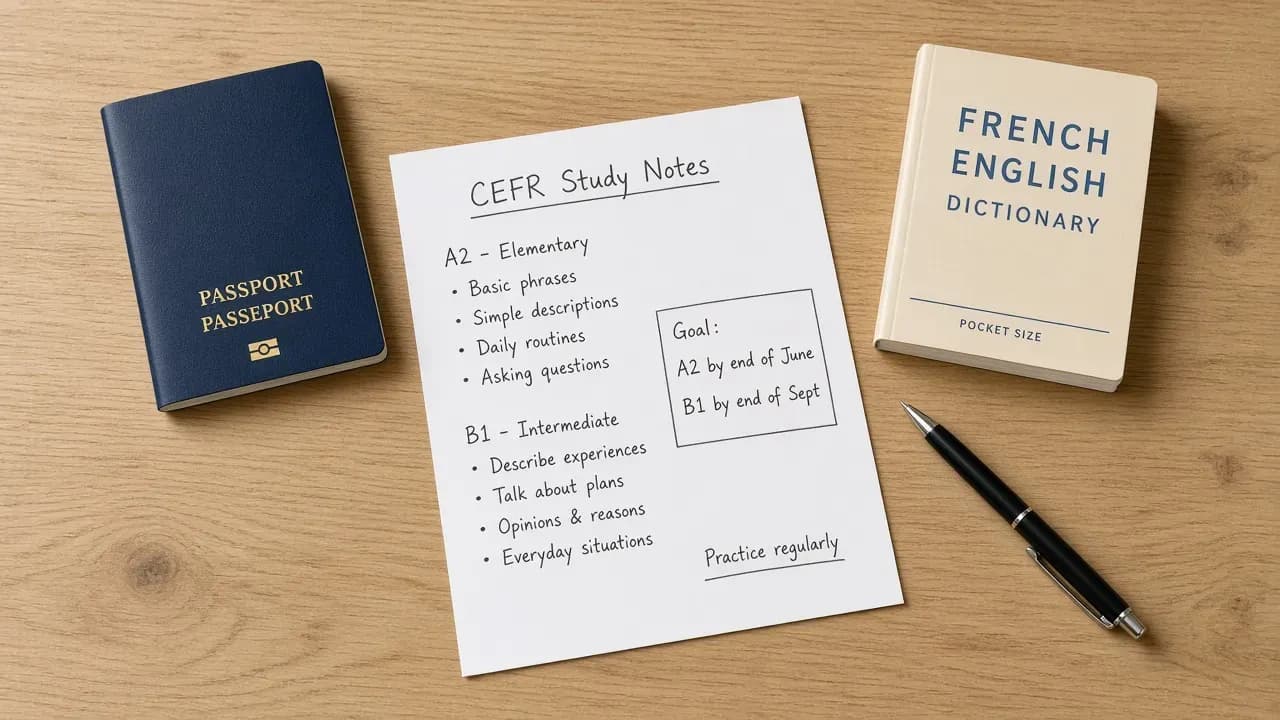
So if your goal is A2 or B1 for life in France, I like to structure weekly practice roughly like this:
about half on speaking and listening
about a third on high-frequency grammar and vocabulary in context
the rest on short writing and reading of real-life texts (emails, forms, messages)
It's the opposite of finishing five textbook chapters and hoping for the best.
A practical plan: 12 weeks to a stronger A2
This is a rhythm I often suggest if you're starting from beginner or elementary level and have a move or renewal on the horizon.
Weekly rhythm
Two 45-60 minute one-to-one lessons with a native tutor (this is where speaking really moves)
15-20 minutes a day of vocabulary and listening
One short real conversation task each week (a voice note, a language exchange, or a role-play with your tutor)
Week-by-week focus
Weeks 1-3: who you are, daily routine, housing, shopping, appointments
Weeks 4-6: past events, travel, health, problems and complaints
Weeks 7-9: opinions, plans, phone calls, formal greetings and emails
Weeks 10-12: timed speaking practice, mock oral tasks, and drilling your weak spots
If you're already around A2 and chasing B1, keep the same rhythm but stretch your answers, listen to more natural-speed French, and practise admin role-plays - the bank, insurance, school, or getting quotes from artisans. Our guide to communicating with French tradesmen is a useful companion if you've got a property project on the go.
And before you start: please don't guess your level. Our free French level test gives you a clearer A0-B2 starting point so the first lessons aren't wasted.
Which exam should you aim for?
Learning French is one thing; proving the level is another.
Depending on your application, you may need an official certificate such as:
The TCF, which is often used for integration, residence and nationality pathways
The DELF, a durable diploma covering A1 to B2
Other approved options for your specific case
My advice is to book the exam when you're close, not when you feel perfect. A date creates healthy urgency. Perfectionism, on the other hand, is how people stay "almost B1" for two years.
Always confirm which test your préfecture or application accepts, and how recent the result needs to be.
Three mistakes that slow UK and USA movers down
1. Studying holiday French for a residence goal
Café dialogues help, and they're fun. They won't carry a préfecture conversation or a B1 oral on their own.
2. Waiting until you live in France to "pick it up"
Immersion only helps if you actually speak. Plenty of expats stay inside English-speaking bubbles for years. Starting serious speaking practice from the UK makes a real difference.
3. Chasing citizenship-level French too early
If your next milestone is A2 or B1, win that first. B2 is a different project, and it can wait until you need it.
How we can help at French Pour Moi
At French Pour Moi, we work one-to-one with adults who need French that holds up in real life - moves, jobs, family admin, and longer-term residence goals.
In practice, that means lessons built around your target level rather than a generic syllabus, plenty of speaking time (including the awkward scenarios), flexible online sessions around work and travel, and a clear path from placement to weekly progress to exam readiness if you need it.
What's the minimum French for long-term life in France in 2026?
I'd plan for A2 as an early residence milestone and B1 as the level that makes daily life feel genuinely workable for most people. Aim for B2 if citizenship is the goal.
Can I reach A2 from the UK before I move?
Yes. With regular speaking lessons and a little daily practice, many adults make strong A2 progress in a few months. Your starting point and how intensively you work will shape the exact timeline.
Is B1 enough to work in France?
Often yes, especially if the role isn't heavily client-facing in French. More specialised or corporate roles may expect B2 or above.
Should I use an app as well as a tutor?
Yes - as a supplement. Apps are great for vocabulary. A tutor helps you build the speaking reflex you'll actually need.
A final thought
In 2026, the people who settle most smoothly don't waste time wondering whether French matters. They pick a level, pick a date, and practise the skills that show up in real French life - especially speaking.
Know your milestone. Train backwards from it. And speak a little sooner than feels comfortable.
Quand vous voulez un plan clair pour A2, B1 ou B2, on est là.